

 Facebook
 X
 Pinterest
 Copy Link

Election season is here, and with the November 3 midterm elections just around the corner, there is plenty of conversation about what the results might mean for the economy, interest rates, and housing market.
Sellers might be wondering, should I wait? Will buyers put their plans on hold? Could the results change home values?
These are reasonable questions. Elections can create uncertainty, and uncertainty can make people hesitant to make big financial decisions. But how much do elections actually influence the housing market? And more importantly, should they influence your decision to sell?
Do Elections Historically Slow Down the Housing Market?
There is a common belief that buyers and sellers put their plans on hold during election years. And there is some logic behind that thinking. When people are uncertain about the economy, future policies, or their financial situation, they may be more cautious about making a major purchase.
But there is an important distinction between a buyer who is uncertain about the election and a buyer who cannot afford the monthly mortgage payment. One may decide to wait a few weeks. The other may need to wait until their financial situation or interest rates change.
We also need to distinguish between presidential elections and midterm elections. Presidential elections typically receive more attention, and much of the historical housing research focuses on those election cycles. We cannot automatically assume midterms have the same impact.
And regardless of the election, people still need to move. Families grow, jobs change, people retire, and homeowners decide it is time for something different.
The question is not whether elections stop people from buying homes. It is whether uncertainty creates enough hesitation to change the pace of the market.
Is This Midterm Election Different?
There has been a lot of conversation about how this year’s midterm election feels different from previous election cycles.
And I think it is worth acknowledging that.
We are heading into November with concerns about inflation, rising costs, interest rates, international conflicts, and the direction of the economy. For many households, these aren’t just political issues. They affect everyday spending, financial security, and decisions about major purchases like a home.
Consumer confidence data helps explain why buyers may be feeling cautious.
The University of Michigan’s Consumer Sentiment Index came in at just 48.0 in October, approximately 10% lower than a year ago. The Conference Board’s Consumer Confidence Index also showed that plans to purchase a home declined slightly on a six-month moving-average basis.
People are concerned about their purchasing power and financial futures.
But here is where I think we need to be careful.
Mortgage rates, inflation, employment, and affordability have been influencing buyer decisions for months. Those concerns won’t necessarily disappear on November 4, regardless of the election results. And while the outcome could influence future economic policies and financial markets, we don’t know exactly how those changes will affect mortgage rates or home prices.
For sellers, I think the more important question is whether that uncertainty is translating into fewer showings, longer days on market, or lower offers in their particular neighborhood.
Mortgage Rates May Matter More Than Election Results
One of the biggest factors influencing today’s housing market is affordability.
According to Freddie Mac, the average 30-year fixed mortgage rate was 7.32% on October 22, 2026, compared with 7.40% the week before.
That may seem like a small difference, but even a fraction of a percentage point can affect what buyers can afford.
Consider a buyer purchasing an $800,000 home with 20% down and a $640,000 mortgage.
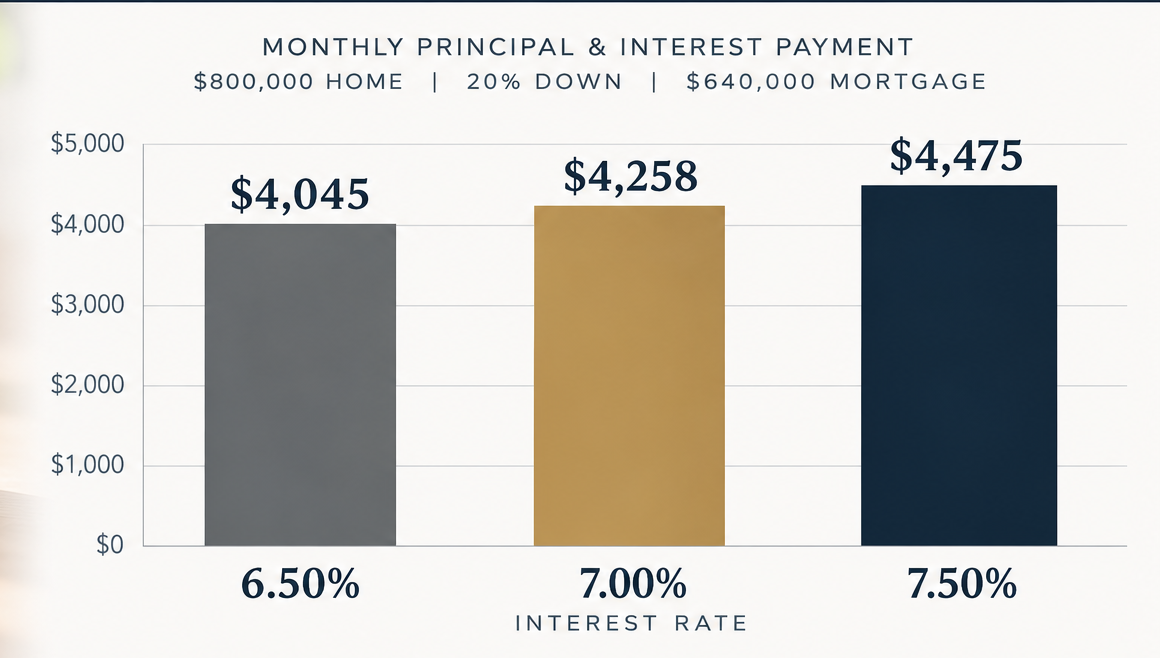
That is a difference of approximately $430 per month between 6.5% and 7.5%, before taxes and insurance.
Mortgage rates do not automatically rise or fall based on which party wins an election. They respond to a much broader combination of factors, including inflation, economic growth, bond markets, and expectations about Federal Reserve policy.
Election results and proposed policies can influence those expectations, but there is no guarantee that rates will move in a particular direction after November 3. For sellers, this matters because a buyer’s monthly payment may have a much greater influence on their decision than the election itself.
What Is Actually Happening in King and Snohomish Counties?
Rather than guessing what might happen after the election, I think it is more useful to look at what we already know.
The latest Northwest Multiple Listing Service (NWMLS) numbers show that our market has been changing throughout 2026.
At the end of September:
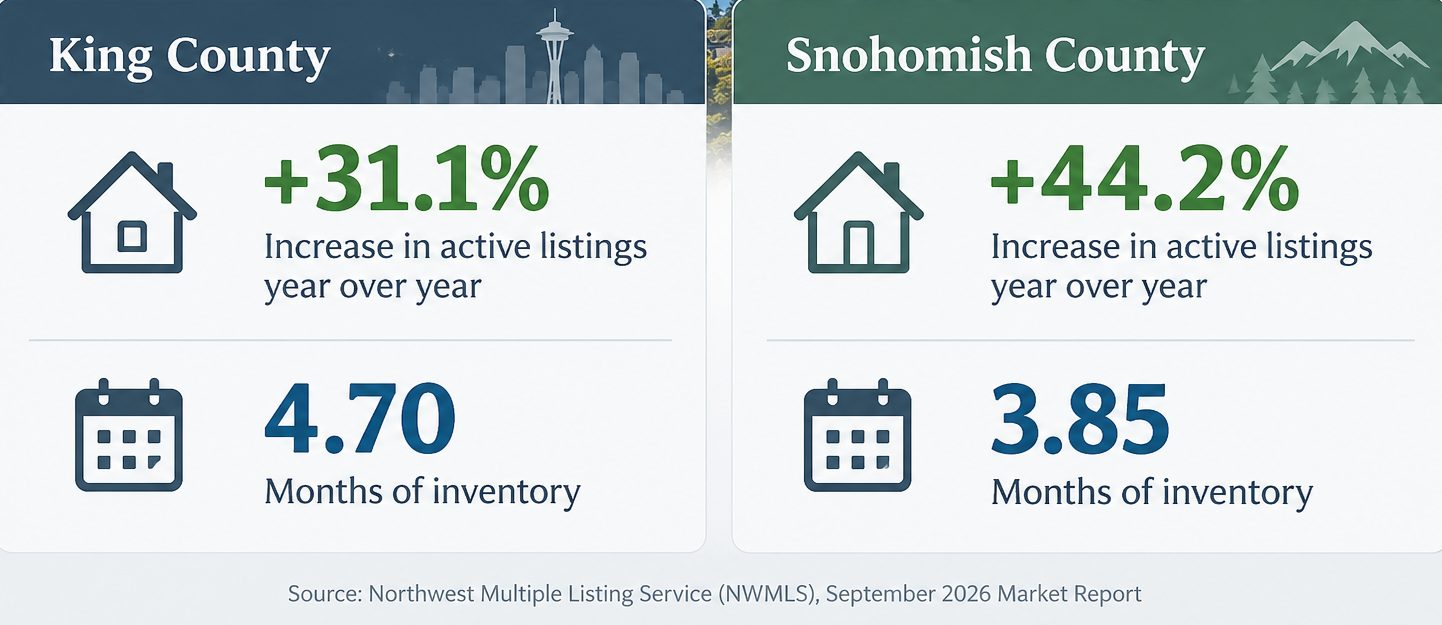
Across the entire NWMLS service area, pending sales were down 15.1% from September 2025, while active listings increased 24.5%.
For sellers, that means more competition for buyer attention. Homes need to be priced appropriately, presented well, and marketed effectively. It also means that a home taking longer to sell is not necessarily a reflection of the home itself. The market has changed, and buyers are approaching their decisions differently.
We have been watching this shift develop for months.
Should You Wait Until After the Election to Sell?
If you are considering selling, I would focus on a few questions before making that decision.
How many homes are currently for sale in your neighborhood? Are similar homes getting showings and going under contract? Are sellers making price reductions? And how does your home compare with the competition?
I would also look at your personal timeline. If you need to sell because of a move, job change, or another life event, waiting for the aftermath of an election may not accomplish much. If you have flexibility, there may be good reasons to wait. Perhaps you need time to make repairs, prepare the house, or work through your next purchase.
Those are factors we can evaluate and plan around.
Trying to predict what the housing market will do because of an election is much harder.
The Bottom Line
The midterm elections may influence consumer confidence and economic expectations, but they are only one piece of a much larger housing market.
Right now, we already have measurable changes happening in King and Snohomish counties. Inventory is up, buyers have more choices, and homes are facing more competition than they were a year ago.
Those conditions deserve our attention regardless of who wins on November 3.
If you are thinking about selling, I would not make the decision based solely on the election or assume that waiting until spring will automatically bring a better result.
I would start with what is happening in your neighborhood, how your home compares with the competition, and what makes sense for your next move.
While elections can influence the economy, real estate is still very much a local market.
And understanding your local market is one of the best ways to make a confident decision about when and how to sell. This is something I can help with, let’s have a conversation to find out what is best for you.

